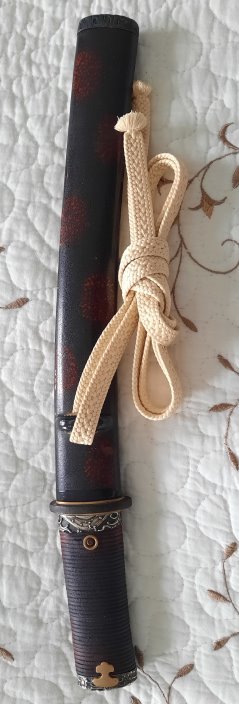
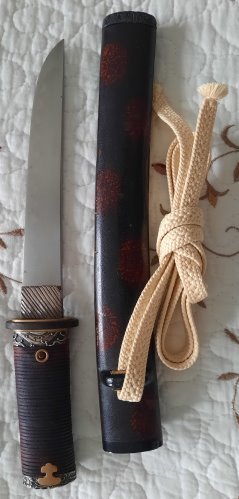
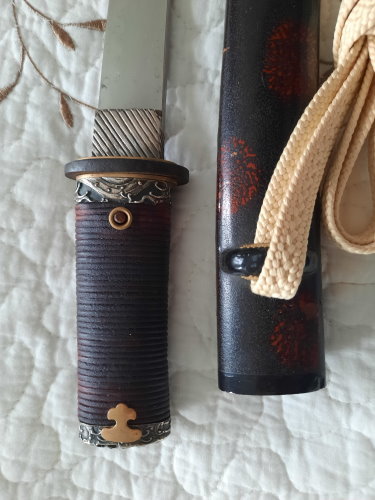
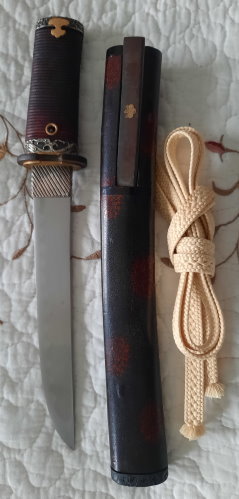
In celebration of milestone events (weddings, births, etc.), Andrea and I have made a tradition of gifting items from our collection to close friends and family.
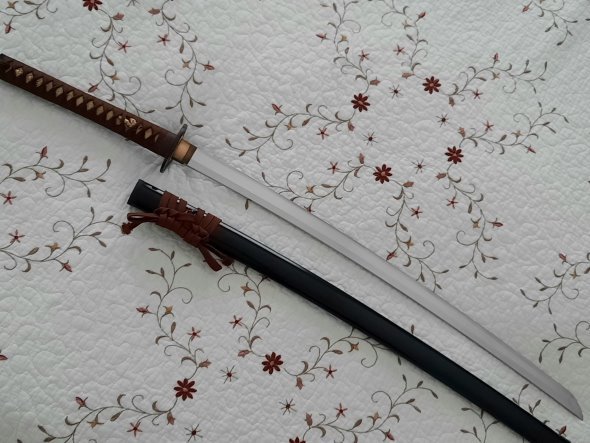
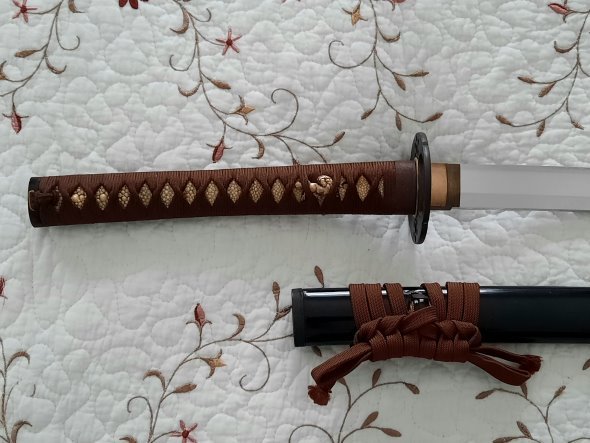
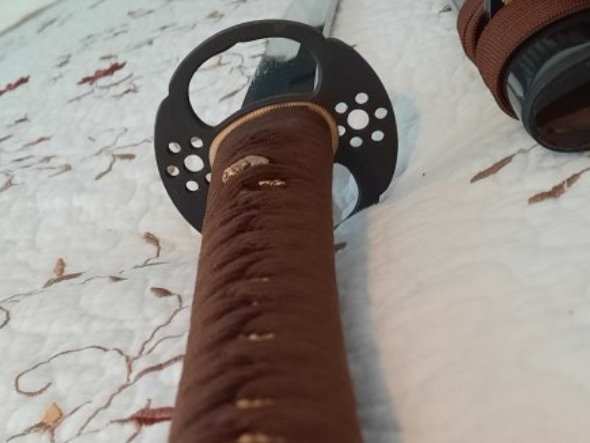
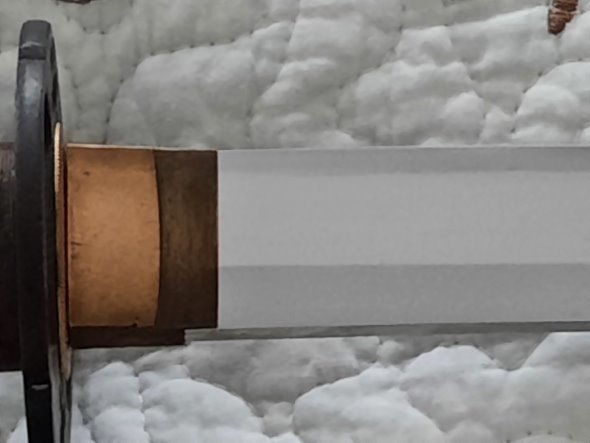
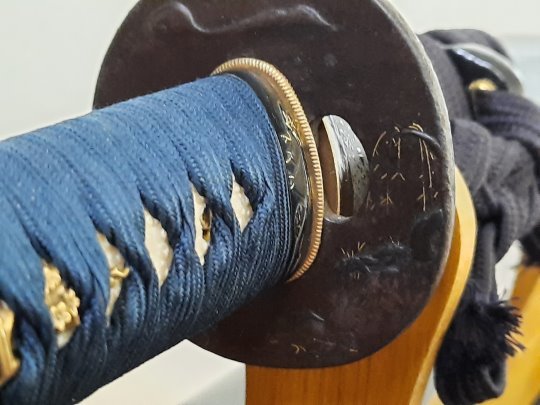
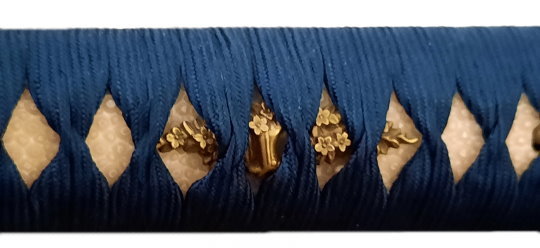
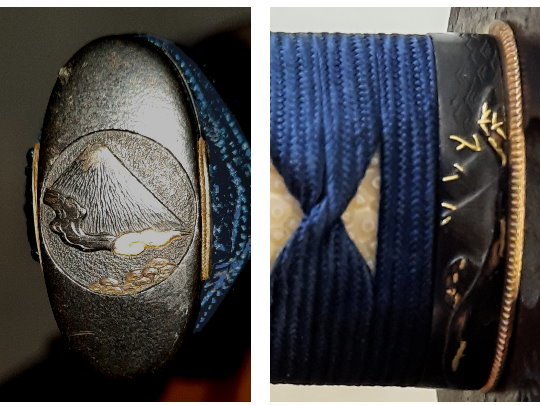
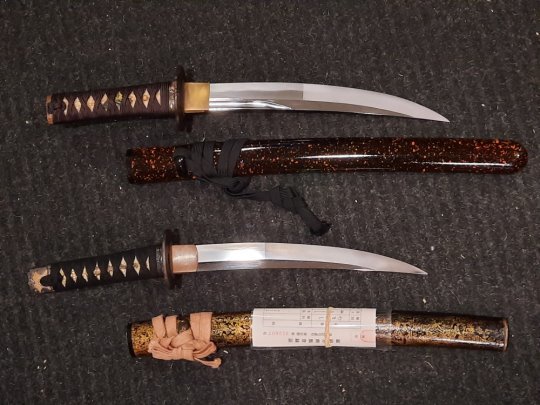
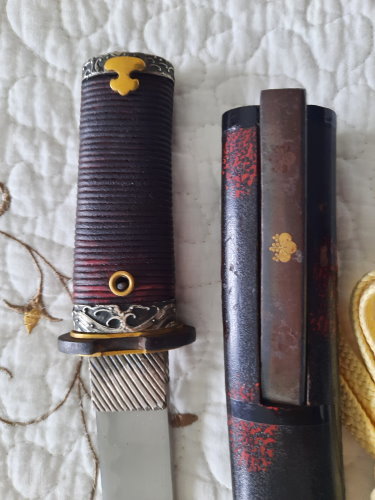
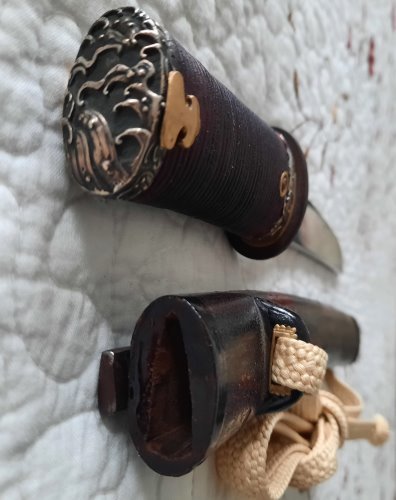
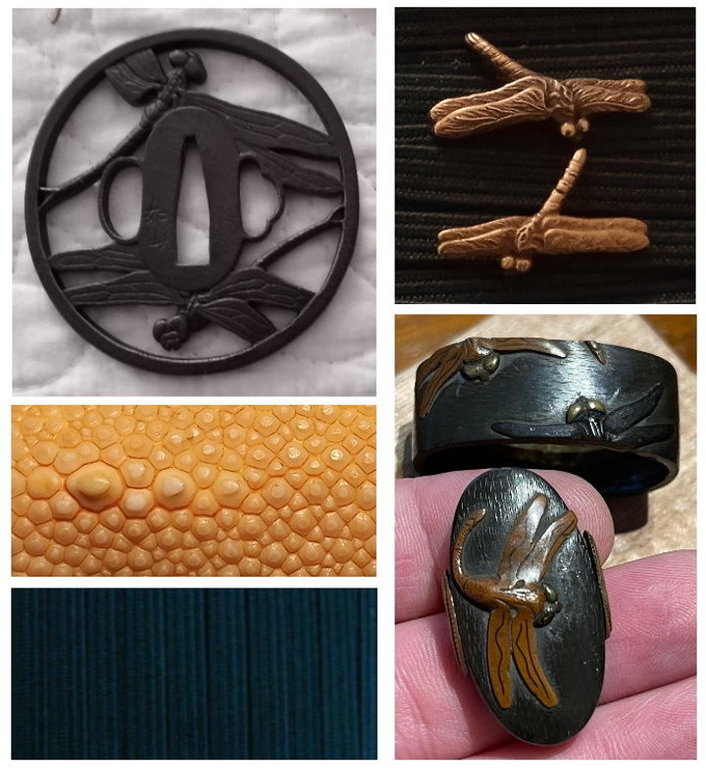
Here's a project that I recently finished for just such an event.... We are sending a friend and his wife this 19th-century Japanese sword (late Edo/ShinShinto). The blade has an old polish. The saya is mostly in its original condition, but I had to rebuild the tsuka (handle), and I was able to find an older Higo style tsuba (guard) with his wife's family crest. I also used ito (silk braid) and menuki (hilt ornaments) that they selected and reflected their interest.
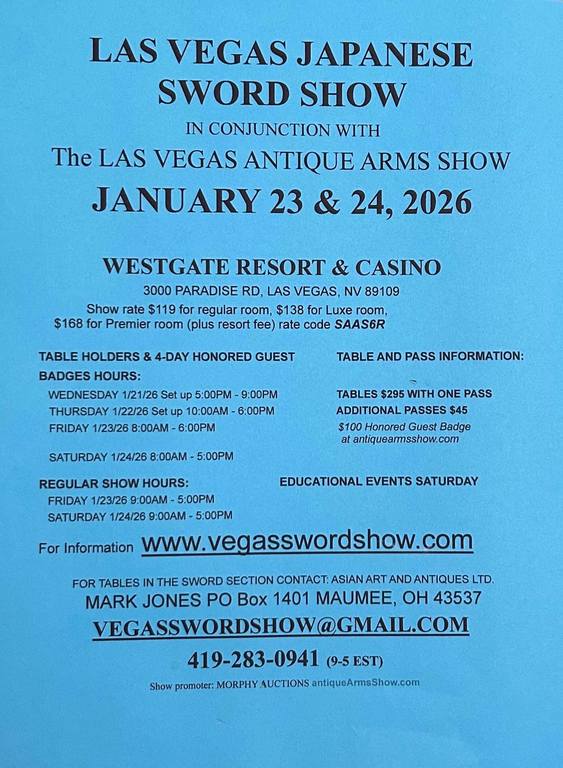
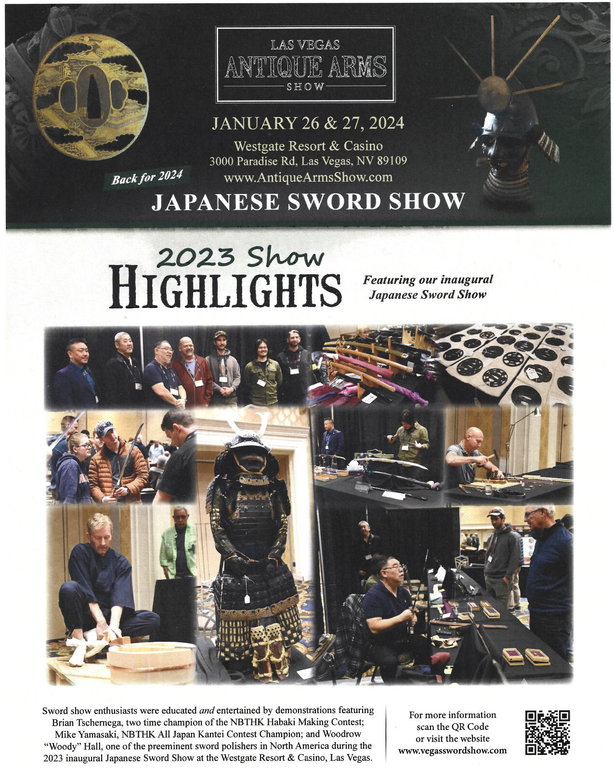
Just a reminder, the next Las Vegas Japanese Sword Show is coming up January 23 & 24, 2026. Sadly, I won't be able to make it this year... If you go, let me know if you find any hidden treasures, of the sword of your dreams.
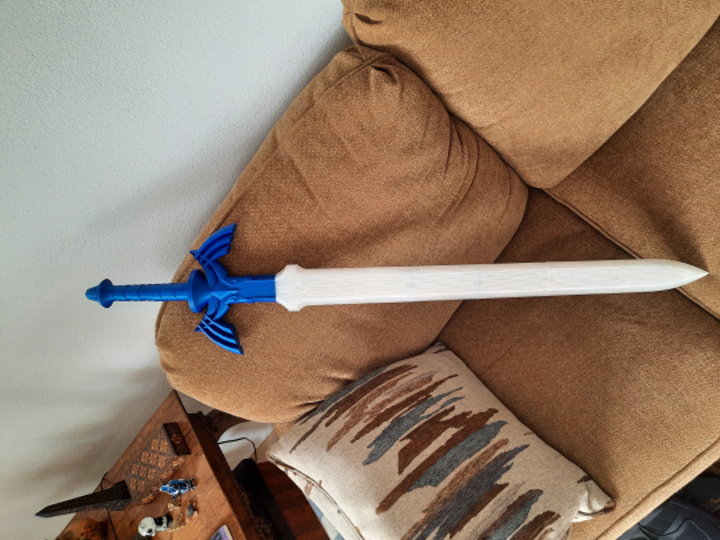
As some of you may know, in addition to working with Japanese Swords I do a lot of work in 3D printing and design. Recently, one of my grad students asked me to help them build a life size version of the iconic 'Master Sword', a legendary divine blade wielded by 'Link' in the on-going saga of "Zelda".
What we wound up creating was this: a modified version of the "Master Sword" by Garrett Kearney that contains a battery, electronics and LED strips. It lights up when you swing it and changes colors on impact.
Let me know if you'd like the instructions, and/or the 3D .STL files and I'll send them your way... Below is a quick pic of the finish product.
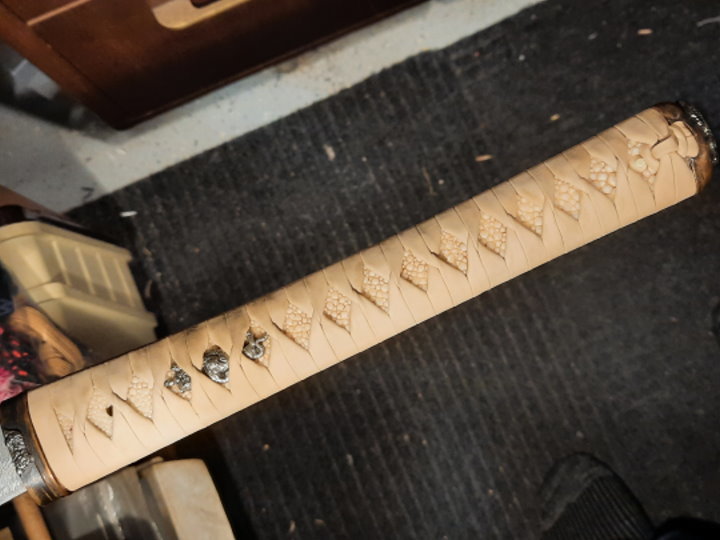
This is a follow-up from my last post, the same client had me rewrap another one of his tsuka. Again, this is done in a varient of the Higo style with leather, but this time we are using 10mm wide doe skin, instead of the two narrow (4mm) strips of leather ito shown in the previous post. Just thought I'd share... What do you think?
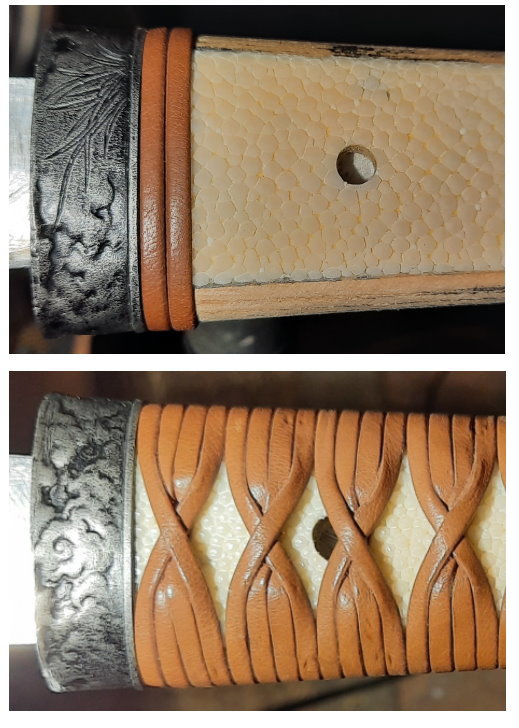
Just a quick note... Recently I was working on a Higo Style Koshirae with a Tomaki Nihon Kumiage Zuki. This style of tsukamaki uses two narrow (4mm) strips of leather ito, and follows the same basic pattern as a Kodai Mrasaku tsuka. One thing I like about this style is both its complexity balanced with its durability and functionality. I should mention that the client both selected the finishing color, as well as the artificial aging of the ito... Let me know what you think.
It has become a tradition for my wife and I to gift swords from our collection as wedding presents to our neices and nephews.
We will select a blade, usually in shirasaya, and ask the couple several questions related to their favorite colors, styles, and themes, then build a set of koshirae for the blade.
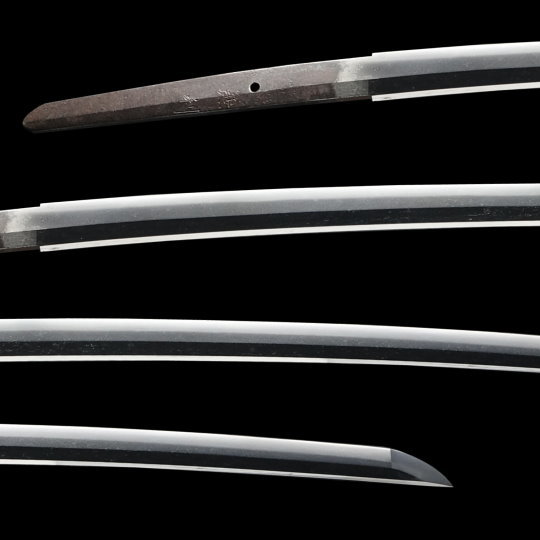
For this gift we selected a late Edo period 27.5 inch katana, signed "Kane Uji".
Below are a few pictures of the blade, and several quick snapshots of the mounts that I took before we gifted our nephew and his fiance with the sword... Let me know what you think.
Last week my wife and I were going through her collection of tanto, and I noted that both of her tanto with large kissaki (O-Kissaki, or 大鋒) are from the the Nanbokucho era, and we were wondering how common is this?
If you're not familiar with this type of Tanto, as you can see in my photo below, these blades are characterized by their tips' significant lengths, appearing visually dominant and longer than the width of the blades.
From what we could find, this was desiged to provide some kind of enhanced slicing power for cutting through armor and/or follows the popular Nanbokucho style that was to create the impression of powerful battlefield swords.
What are you thoughts? Let me know what you think...
The May Shinsa for Japanese swords by NBTHK had 1700 available slots and was filled in less than 40 minutes.
Anyone considering sending swords to Japan for shinsa needs to be aware of the time constraints. Swords shipped to Japan must arrive prior to the end of the month in order for a licensing appointment the following month. Once licensed, the sword is eligible for shinsa registration after the month of licensing (if shinsa is offered). Shinsa submission follows in the month after shinsa registration. This means just getting a sword into Japan and submitted for licensing and shinsa is a minimum four month process or longer depending on when the shinsa is offered.
For reference, here is a link to the NBTHK (English) Website with the Shinsa Application, and below is the current Shina Schedule for 2024 & 2025:
2024
April Tokubetsu Juyo Shinsa Submission dates 4/1-4/3 on-line registration 3/1-3/25
May Kodogu Hozon/Tokubetsu H. Submission dates 5/7-5/9 on-line registration 4/1-4/25
June Swords Hozon/Tokubetsu H. Submission dates 6/3-6/5 on-line registration 5/1-5/25
Aug. Kodogu Hozon/Tokubetsu H. Submission dates 8/5-8/7 on-line registration 7/1-7/25
Sept. Swords Hozon/Tokubetsu H. Submission dates 9/2-9/4 on-line registration 8/1-8/25
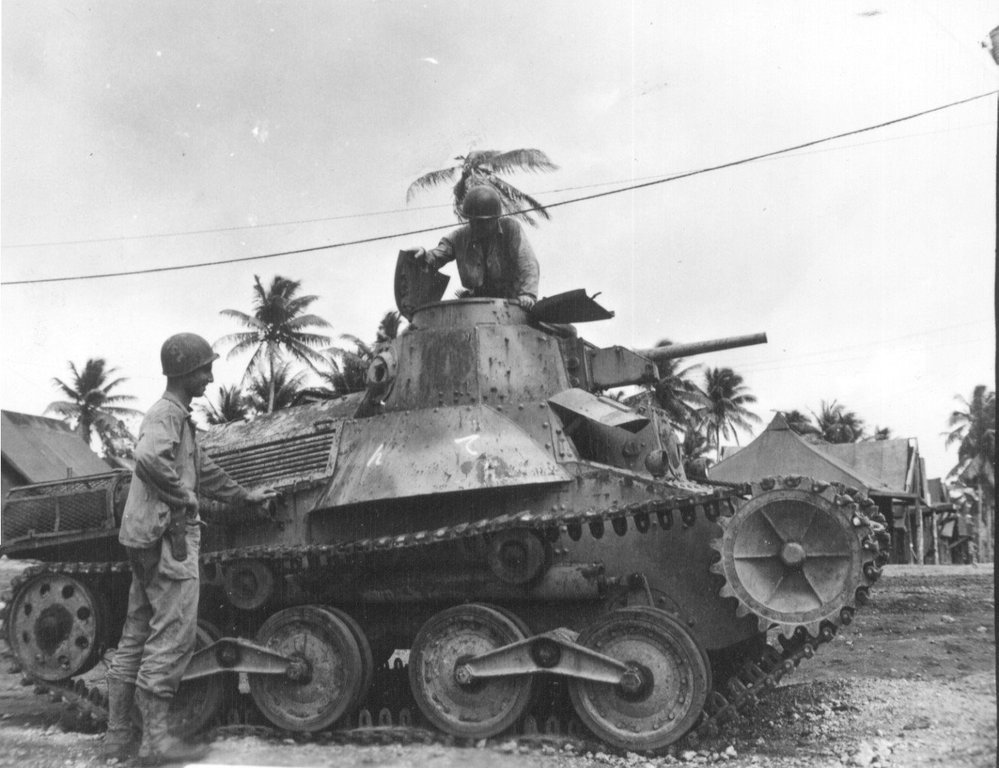
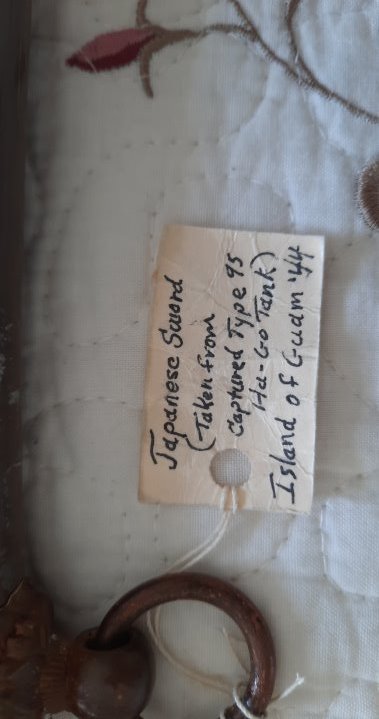
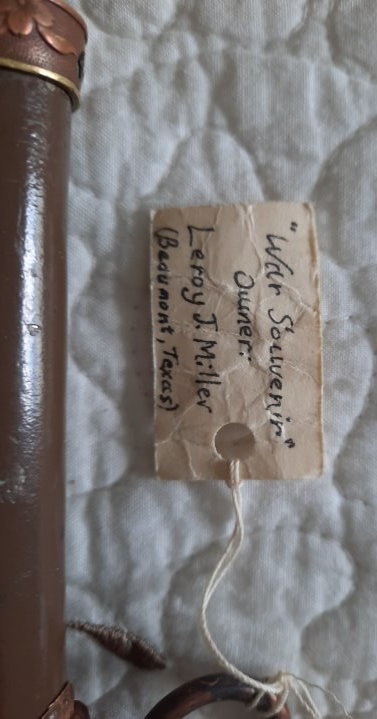
This WWII Japanese Tank Corps Sword (Gunto) was taken from a captured ‘Type 95 Ha-Go’ light tank on Guam Island. It was brought to the US as a ‘war souvenir’ by Leroy Joseph Miller, and recently purchased for a client of mine at Leroy Joseph Miller’s estate sale auction (Mar 28, 2024).
Leroy Joseph Miller was born February 26, 1926, and grew up in the Beaumont, Texas area. During World War II, Leroy served in the U.S. Navy from January 1944 to January 1946, and was assigned to an amphibious operating base in the South Pacific. Leroy passed away on October 17, 2023.
About the Sword
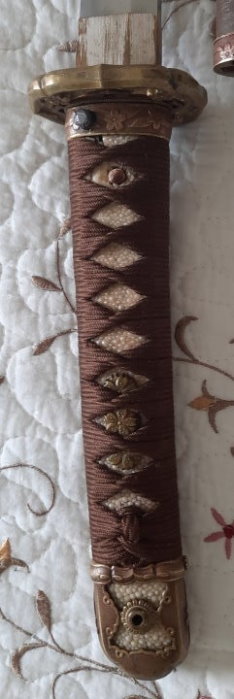
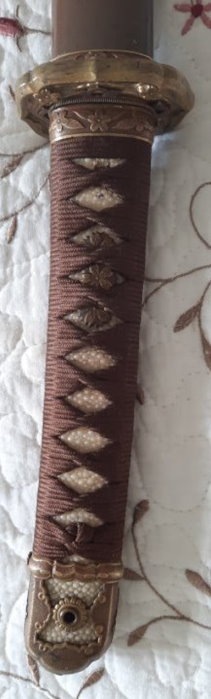
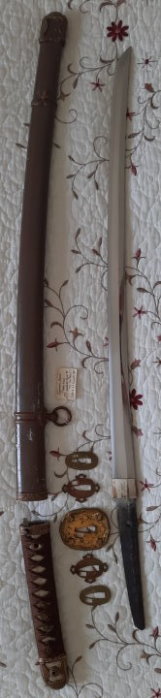
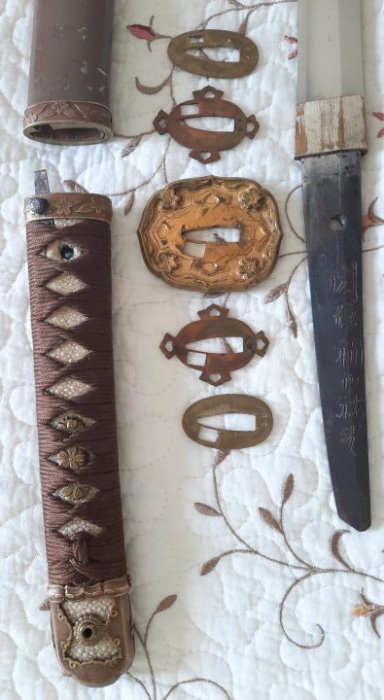
I rewrapped the tsuka in traditional Type 98 Gunto style. The blade is in near full polish, with a few minor scratches and several small chips, but overall it is in very good condition. One of the things that caught my eye was the tag attached to the saya (see pictures below).
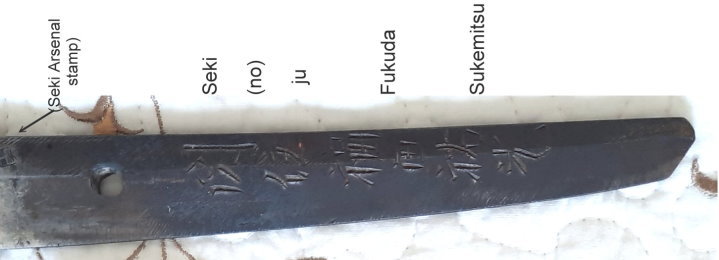
Sword Signature (Mei): Seki (no) ju Fukuda Sukemitsu – Made by Fukuda Sukemitsu in the town of Seki. Shin-gunto koshirae with a Suguha temperline (hamon), a blade length of 23.75”.
All the stamped part numbers on saya, seppa, tsuba, and fuchi match ("08").
Note, this sword has an unusually small tsuka (8.25") and saya (26"), similar to other Japanese Air & Tank Corps swords.
About the Smith
Fukuda Tesshinsai was born on the 10th of October 1909. He became a Seki Tosho (Sword-smith) at the town of Seki in the Mino Province of Japan on 12th Sept 1941, changed his name to Fukuda Sukemitsu, and produced both gunto and gendiato until the end of the war.
After WWII, from 1945 until he retired in 1958, he produced both traditionally made Japanese swords and high-end cutlery.
I recently replaced the leather wrap on this Shin-Shinto Tanto. Although two-thirds of the wrap was missing from the tsuka when I received it, what was there gave me a good understanding of the original color(s), texture, leather ito size, and overall finish... I'm comfortable in saying that I accurately reproduced here.
All the fittings are original, with solid silver fuchi/kashira, solid gold seppa and shitodome, and silver foil over the habaki - the only thing I replaced was the leather ito... Let me know what you think.
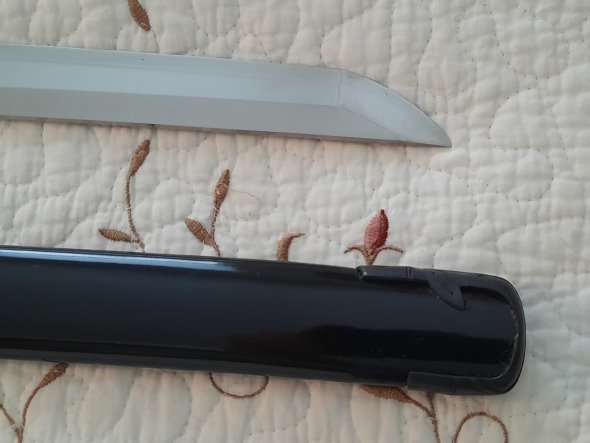
Over break, our friend Tom Gibbons built a door around a stained glass window for Andrea and me, in exchange I built new Koshirae (sword fittings) for one of our Japanese Shinshinto era sword blades (circa, 1820). Now we have a beautiful new door, and Tom has his first antique samurai sword - Excellent Trade!
Cutting and carving the wood for Tom G.'s sword.
The saya (scabbard) at different stages before being lacquered.
Recently, I was presented with a late Edo tsuka from a sword that had been used as an iai-to. I needed to repair the mekugi-ana, and put on a full wrap of same' to strengthen the tsuka. Interestingly, the owner requested gyakumenuki (gyaku meaning "reverse") wherein the menuki are positioned the the other way around, so that the menuki fits into the palm of the hand when held with a standard right handed grip.
On traditionally mounted swords this is rare, but among modern iai-do practioners which way the menuki are mounted is largely personal preference. Most people are used to the standard configuration, some find the menuki feels more natural and comfortable when in the palm of their hand.